Your imported Gannan oranges started molding or shriveling within two weeks — and you're wondering if the fruit is at fault? It's not the oranges. 90% of citrus spoilage comes from how they're stored, not the fruit itself. This guide shares a proven no-fridge method that keeps Gannan navel oranges fresh for 30+ days at room temperature — plus shelf-life management tips for European importers.
| Quick Answer | Key Point |
|---|---|
| Best storage temp | 4–10°C ventilated (15–20°C room temp still works for 30+ days) |
| Core trick | Wrap each fruit in paper + single layer + never wash |
| Shelf life | 30+ days at room temp; 60–90 days refrigerated |
| Biggest mistake | Storing wet (mold trigger) and stacking (pressure bruising) |
Contents: ① Pre-Storage Inspection → ② The Paper-Wrapping Method → ③ Placement & Container → ④ Common Mistakes → ⑤ Fridge vs Room Temp → ⑥ Shelf-Life Management for Importers
① Pre-Storage Inspection: Keep Only the Perfect Fruit
The first step isn't wrapping — it's sorting. Inspect every single orange:
- Soft spots, cuts, broken skin → eat now or discard (they're entry points for mold)
- Loose stems, weeping juice → consume first
- Intact, firm, tight peel → eligible for long-term storage
One bad fruit can infect an entire box through contact — the #1 cause of failed bulk storage.
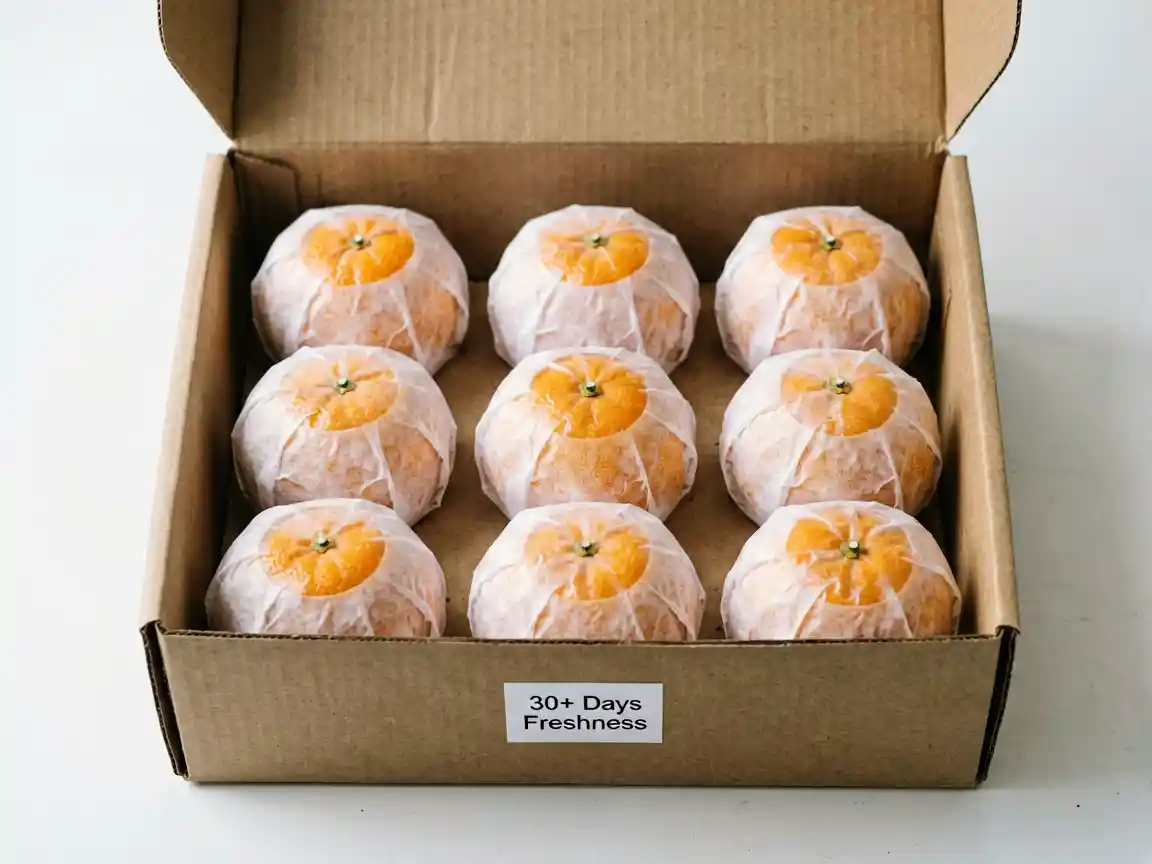
② Paper Wrapping: Why This Step Is "Preservation Magic"
Do NOT wash. Do NOT wash. Do NOT wash. Moisture on the peel is the ideal breeding ground for mold. Instead:
- Wrap each fruit in a single sheet of dry paper (newspaper, tissue, or wrapping paper all work)
- The paper absorbs excess moisture and ethylene gas, slowing ripening
- It also stops mold from spreading between fruits
If the peel is genuinely dirty, wipe it with a dry cloth and make sure it's fully dry before wrapping.
③ Placement & Container: Single Layer, Ventilated
Wrapped oranges should be placed in a single layer in a ventilated container:
- Cardboard boxes, wooden crates, or perforated plastic baskets all work
- Never stack more than two layers — pressure on the bottom fruit accelerates rot
- Choose a container with air holes; sealed environments trap moisture
- Keep in a cool, dry, dark spot away from radiators, stoves, and direct sun
④ Five Common Mistakes (And How to Avoid Them)
| Mistake | Result | Correct Approach |
|---|---|---|
| Washing before storing | Mold within 3–5 days | Dry cloth only; fully dry before wrapping |
| Stacking in boxes | Bottom bruising, rot spread | Single layer |
| Sealed plastic bags | Condensation, faster spoilage | Ventilated container |
| Storing with apples/bananas | Ethylene accelerates softening | Store separately |
| Direct sunlight | Dehydration, flavor loss | Cool, dark place |
⑤ Fridge vs Room Temperature: When to Use Each
Room temperature (15–20°C): with the method above, keep fruit fresh 30+ days at peak flavor.
Refrigerated (4–8°C): extend to 60–90 days, but allow 1–2 hours at room temp before eating for best flavor.
For freezing and more preservation techniques, see our freezing guide.
⑥ Importer View: Turning Shelf Life into Margin
As a European importer or retailer, what matters isn't just "how to store" — it's how to turn shelf life into profit:
- Cold-chain arrival: our export fruit travels in a 4°C cold chain and still carries 20+ days of shelf life at port — see our cold chain logistics guide
- Grade-matched supply: Grade A commercial for retail shelves, Grade B processing for juice/foodservice — check the grading standards
- Packaging options: ventilated cartons, trays, private label — all customizable. Explore packaging & private label
Conclusion: Good Fruit + Correct Storage = 30+ Days of Freshness
Remember four words: sort, wrap, single-layer, ventilate. Do these four and your Gannan oranges will easily stay fresh for 30+ days at room temperature. Want quality guaranteed at the source? Start with our export-grade Gannan navel oranges.
FAQ: Gannan Orange Storage
Can Gannan oranges be stored in the fridge?
Yes. Refrigeration (4–8°C) extends freshness to 60–90 days, but the peel must be completely dry before refrigerating, and never seal them in plastic bags. Allow 1–2 hours at room temperature before eating for best flavor.
Can I still eat an orange with white mold on the peel?
No. White fuzz indicates mold contamination — mold may already have penetrated the flesh. Discard it and check nearby oranges in the same box for spread.
Why do my oranges dry out within days?
Dehydration usually comes from: unwrapped fruit exposed to air, an overly dry spot (near heating), or micro-damage to the peel. Wrapping in paper and storing in a cool place fixes most cases.
Do I really need to wrap each orange individually? That's tedious.
Wrapping takes seconds per fruit and is the difference between 30-day freshness and two-week spoilage. For bulk, wrap 2–3 fruits in one larger sheet — slightly less effective, still far better than nothing.