Traceability is no longer optional — it's a regulatory requirement and competitive advantage. This case study examines how a mid-sized Chinese citrus exporter implemented farm-to-shelf traceability, reduced recall risk, and won premium European retail contracts.
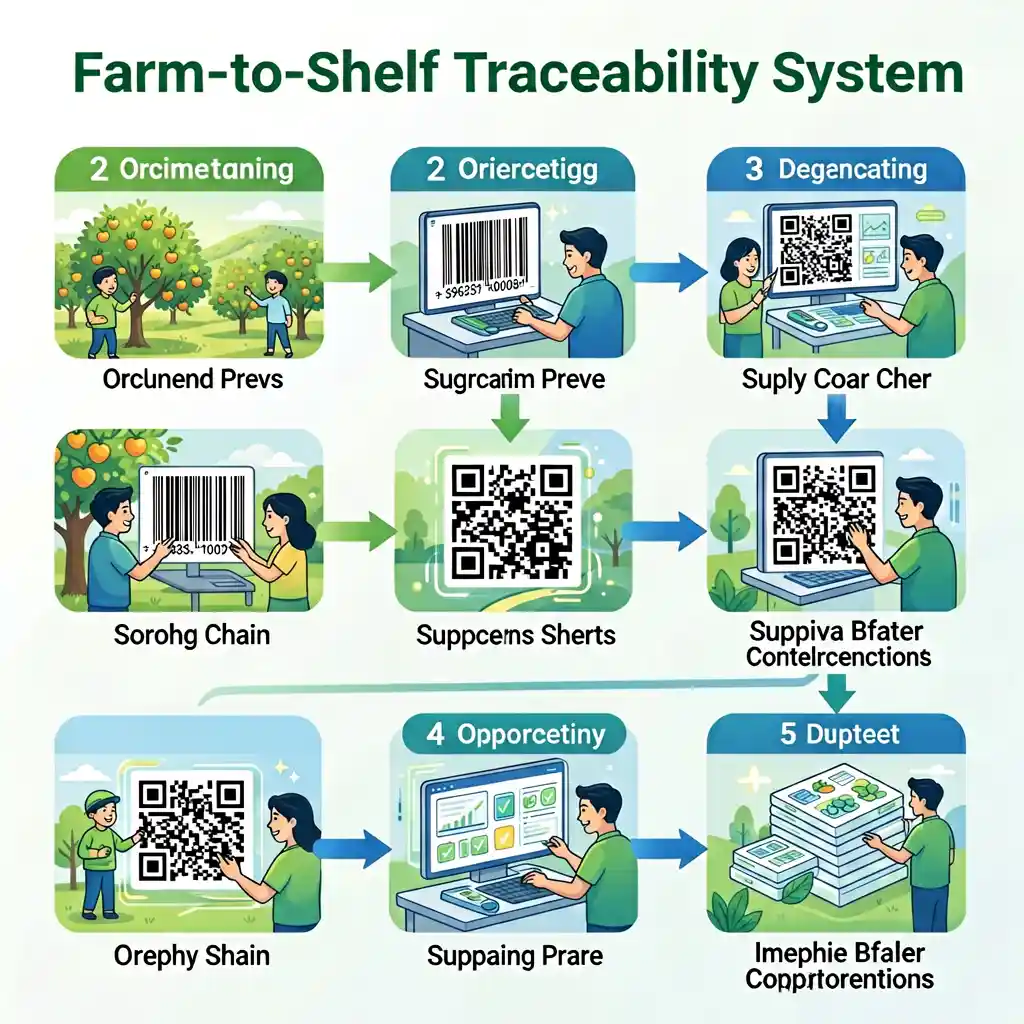
| Quick Answer | Results |
|---|---|
| Company profile | 200ha orchard, 8,000 tons/year |
| Implementation time | 4 months |
| Investment | $45,000 (system + training) |
| Recall capability | LOT-level in <2 hours |
| Premium achieved | +15% contract price |
| Buyer response | 2 new EU retail contracts |
Contents: ① Background → ② Challenge → ③ Solution → ④ Implementation → ⑤ Results → ⑥ Lessons Learned
① Background
X Company (anonymized) operates 200 hectares of navel orange orchards in Gannan, Jiangxi. Prior to 2025, they exported through traders with minimal direct traceability. Buyers couldn't verify origin or treatment history.
② The Challenge
- No LOT tracking: Mixed harvests made recall impossible
- Buyer demands: EU retailers required full traceability
- Competition: Certified competitors won premium contracts
- Risk: Single contamination event could destroy company
③ The Solution
X Company implemented a three-tier traceability system:
Tier 1: Orchard Mapping
- GPS-tagged blocks (50 blocks × 4ha)
- Per-block spray and harvest records
- Soil and water test archive
Tier 2: Packhouse Scanning
- Incoming LOT barcode at reception
- Grading data linked to LOT
- Treatment (wax, fungicide) logged
Tier 3: Distribution Tracking
- Pallet-level QR codes
- Container and vessel linkage
- Destination warehouse mapping
④ Implementation Timeline
| Month | Activity |
|---|---|
| 1 | Orchard GPS mapping, staff training |
| 2 | Packhouse barcode system install |
| 3 | Software integration, pilot LOT |
| 4 | Full rollout, buyer audit passed |
⑤ Results
Operational Improvements
- Recall time: From impossible → 2 hours LOT-level
- Quality claims: Reduced 70% (better LOT isolation)
- Buyer confidence: 2 new EU retail contracts
- Price premium: +15% on traceable volumes
Compliance Wins
- EU audit passed first time
- FSMA (US) compliance demonstrated
- GlobalG.A.P. upgraded to higher tier
For system details, see our traceability systems guide.
⑥ Lessons Learned
What Worked
- Start with orchard mapping (foundation)
- Involve packhouse staff early (buy-in)
- Choose scalable software (cloud-based)
- Audit internally before buyer audit
What to Avoid
- Don't skip staff training (adoption fails)
- Don't over-engineer (start simple)
- Don't mix old/new LOTs during transition
Summary: Traceability is an Investment, Not Cost
X Company's $45K investment returned within 8 months through premium pricing and new contracts. Traceability transformed them from commodity supplier to preferred partner.
Need More Information?
Our team is ready to assist with your citrus import needs. Contact us for:
- Product specifications: Detailed quality parameters
- Pricing quotes: Competitive FOB/CIF pricing
- Shipping schedules: Available container slots
- Documentation: Complete export paperwork
FAQ: Traceability Case Study
How much does traceability implementation cost?
For a 200ha operation, $40-60K covers software, hardware (scanners, printers), and training. Larger operations benefit from economies of scale, dropping per-ton cost significantly.
How long until ROI?
Typically 6-12 months if it unlocks premium contracts. X Company achieved payback in 8 months through +15% pricing on traceable volumes.
Can small orchards afford traceability?
Yes. Cloud-based SaaS solutions start at $200/month. Even manual LOT logs (spreadsheet + QR labels) satisfy most buyer requirements at near-zero cost.
Do EU buyers really check traceability?
Yes. Major retailers (Lidl, Aldi, Tesco) require full farm-to-shelf traceability as a contractual condition. Without it, you cannot supply their private label programs.
What's the minimum viable traceability?
LOT-level identification from orchard block through packhouse to pallet, with associated records (spray dates, harvest date, treatment). This satisfies 90% of buyer requirements.