Getting Chinese citrus through US customs can be a bottleneck — delayed inspections, missing documentation, and compliance surprises add cost and risk. This guide walks you through the Gannan navel orange USA customs clearance process step by step, with practical tips to speed everything up.
| Quick Answer | Key Points |
|---|---|
| Customs clearance time | 24-72 hours for complete shipments |
| Key agencies | CBP, USDA/APHIS, FDA |
| Common delays | Documentation errors, temperature excursions, random sampling |
| Cost of delays | $150-400/day demurrage and storage at port |
| Fastest route | Pre-clearance at Chinese port + complete documentation |
Contents: ① Customs Entry Process → ② Required Documentation → ③ USDA/APHIS Inspection → ④ FDA Examination → ⑤ Common Problems & Solutions → ⑥ Expediting Clearance → ⑦ Post-Clearance Steps
① Customs Entry Process
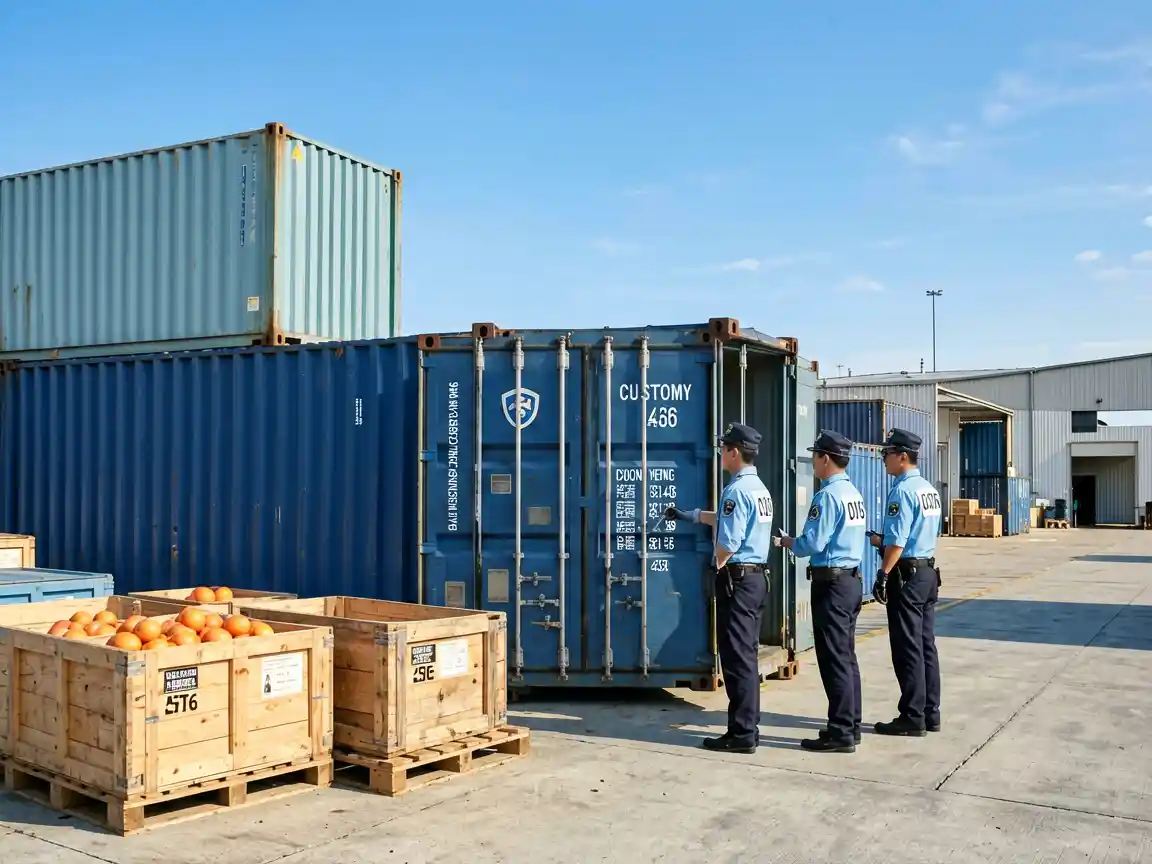
When your Gannan oranges arrive at a US port, the clearance process involves multiple agencies:
- Customs and Border Protection (CBP): Files the entry summary, assesses duties, releases the cargo
- USDA/APHIS: Inspects for pests, diseases, and phytosanitary compliance
- FDA: Examines for food safety, pesticide residues, and labeling compliance
All three agencies must clear your shipment before it can move to distribution.
② Required Documentation
Incomplete or incorrect documentation is the #1 cause of customs delays. Ensure you have:
| Document | When Required | Common Errors |
|---|---|---|
| Entry Summary (CBP Form 7501) | Upon arrival | Incorrect HS code, undervaluation |
| Phytosanitary Certificate | Before arrival | Expired certificate, missing heat treatment notation |
| Commercial Invoice | Before arrival | Mismatched values, missing buyer/seller details |
| Packing List | Before arrival | Weight discrepancies, incorrect carton counts |
| Bill of Lading | Before arrival | Consignee errors, seal number mismatches |
| FDA Prior Notice | 4 hours before arrival | Filed late or with incorrect information |
| Temperature Logs | With shipment | Missing or showing temperature excursions |
For complete documentation requirements, see our US import guide.
③ USDA/APHIS Inspection
APHIS inspectors conduct physical examination of your citrus shipment:
- Temperature check: Container must maintain 4-6°C throughout transit
- Pest inspection: Visual examination for fruit fly larvae, scale insects, mites
- Documentation verification: Cross-check phytosanitary certificate against shipment
- Sampling: Random samples may be taken for laboratory testing
If your shipment passes APHIS inspection, you receive a Release Order allowing the cargo to proceed.
④ FDA Examination
The FDA may conduct additional examinations:
- Label review: COOL compliance, ingredient declarations
- Sampling: May collect samples for pesticide residue testing
- Facility verification: Confirm FDA registration numbers on packaging
FDA examinations are typically random but can be targeted based on risk assessments or previous compliance history.

⑤ Common Problems & Solutions
| Problem | Impact | Solution |
|---|---|---|
| Missing phytosanitary certificate | Shipment held indefinitely | Obtain from GACC before shipment; use digital copies |
| Temperature excursion | Rejection or re-export | Use data loggers; maintain 4-6°C; have contingency plans |
| Pesticide residue exceedance | Refusal of admission | Test before shipment; ensure compliance with EPA MRLs |
| Incomplete documentation | 24-72 hour delays | Pre-file all documents; use customs broker |
| Label non-compliance | Removal from market | Pre-approve packaging with COOL requirements |
| Port congestion | Extended holds, demurrage | Choose less congested ports; schedule arrivals strategically |
⑥ Expediting Clearance
Several strategies can speed up the customs clearance process:
- Pre-clearance at Chinese port: Submit documentation to US customs before shipment departs China
- C-TPAT membership: Customs-Trade Partnership Against Terrorism provides expedited processing
- Free Trade Zone (FTZ): Store cargo in FTZ while documentation is finalized
- Expedited Release program: For trusted importers with clean compliance history
- Dedicated customs broker: Experienced brokers know the specific requirements for citrus
GannanGrove provides pre-clearance documentation packages that can be submitted to your customs broker before the vessel departs, reducing US port hold time by 40-60%.
⑦ Post-Clearance Steps
After customs releases your shipment:
- Arrange trucking: Schedule reefer transport to warehouse or distribution center
- Warehouse receipt: Verify temperature upon arrival
- Distribution: Ship to retailers or food processors
- Record keeping: Maintain all documentation for 2 years (FDA requirement)
Typical timeline: Clearance (1-3 days) → Trucking (1-2 days) → Distribution (ongoing).
Need Customs Support?
GannanGrove offers customs clearance support for US importers:
- Pre-compiled documentation packages
- Recommended customs brokers in major US ports
- Pre-clearance filing assistance
- Compliance consulting
Summary: Smooth Clearance Requires Preparation
US customs clearance for Chinese citrus is straightforward when all documentation is complete and accurate. The key is preparation — have all documents ready before shipment arrives, choose experienced customs brokers, and maintain temperature control throughout the supply chain. For more details, see our FDA requirements guide and complete import guide.
FAQ: USA Customs Clearance for Gannan Oranges
How long does customs clearance take for Chinese oranges in the US?
With complete documentation, customs clearance typically takes 24-72 hours. Delays occur when documentation is incomplete, temperature excursions are detected, or random FDA sampling is conducted. Pre-clearance filing can reduce this to under 24 hours.
What happens if my citrus shipment fails US customs inspection?
Options include: re-exportation (return to China), destruction at importer's expense, or treatment (fumigation/heat treatment) at port if facilities are available. Prevention through proper documentation and pre-shipment inspection is far more cost-effective than dealing with failures.
Do I need a customs broker for importing citrus to the US?
Yes, licensed customs brokers are required for commercial imports. They file entry documents with CBP, coordinate with USDA and FDA, and ensure compliance with all regulations. GannanGrove can recommend experienced brokers in major US ports.
What are demurrage and detention charges?
Demurrage charges apply when containers remain at the port beyond free time (typically 5-7 days). Detention charges apply when containers are kept outside the port beyond free time. Both can cost $150-400 per day per container. Proper documentation and quick clearance avoid these fees.
Can I clear customs at any US port?
No. Chinese citrus may only enter through designated ports with USDA inspection facilities. Primary ports include Los Angeles/Long Beach, Seattle-Tacoma, Miami, and Houston. Your customs broker will advise on the best port based on your destination.