Importing citrus to North America requires understanding different regulatory frameworks, quality standards, and market opportunities. This hub compares import requirements for the USA and Canada to help you make informed decisions.
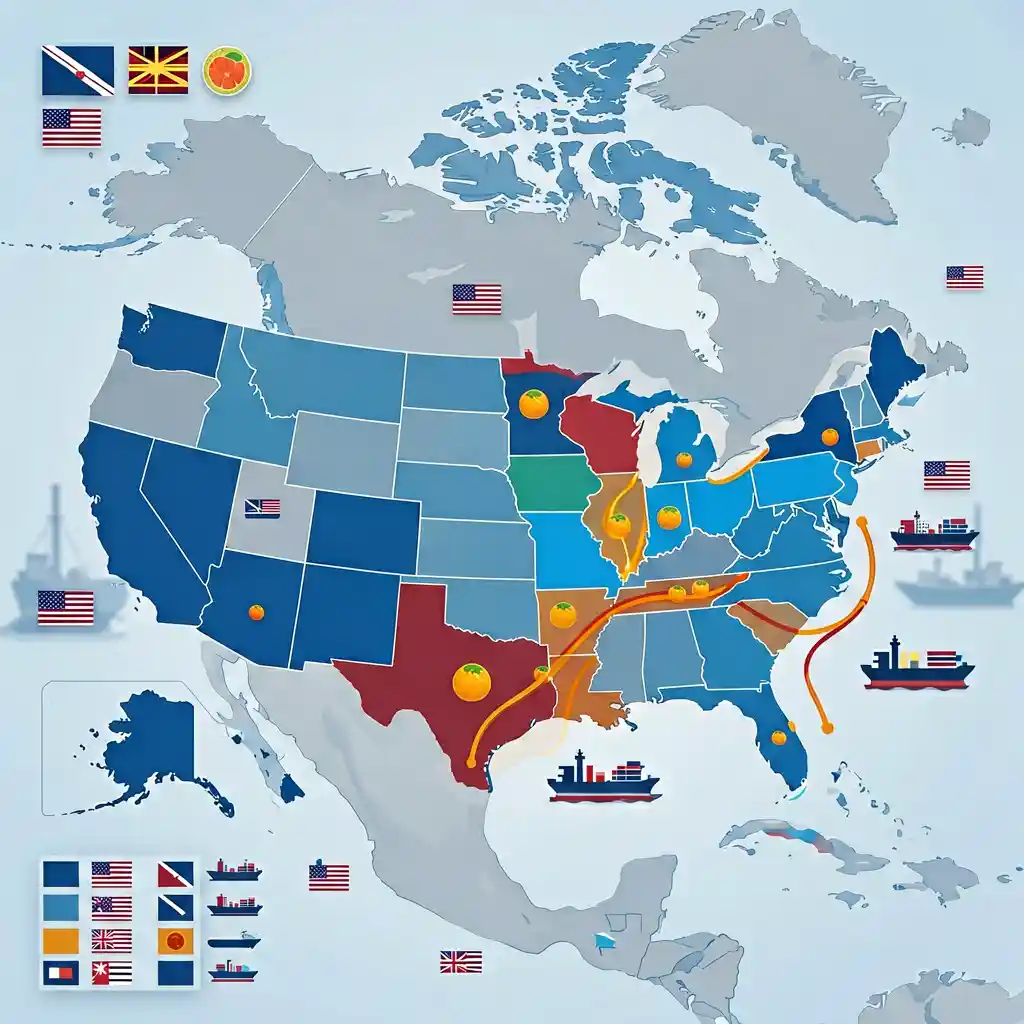
🌎 North America Import Hub
Complete comparison of USA and Canada citrus import requirements, procedures, and market opportunities.
🇺🇸 USA Import Guide
- US FDA Import Requirements for Chinese Citrus 2026 - FDA compliance
- How to Import Gannan Oranges to USA: Complete Guide 2026 - Full import process
- Gannan Navel Orange USA Customs Clearance Process - Customs procedures
🇨🇦 Canada Import Guide
- How to Import Gannan Oranges to Canada: Complete Guide 2026 - CFIA requirements
- Canada Citrus Distribution Network: Major Cities & Retailers 2026 - Distribution channels
⚖️ Comparison & Analysis
- Canada vs USA Citrus Import Regulations: Complete Comparison 2026 - Side-by-side comparison
- Chinese Citrus in the USA Market: Market Share 2026 - Market analysis
Quick Comparison: USA vs Canada
| Requirement | USA | Canada |
|---|---|---|
| Regulatory agency | USDA/APHIS + FDA | CFIA |
| Import permit | Required (APHIS) | Required (CFIA) |
| Minimum Brix | 12° (market standard) | 9.5° (de facto 10-12°) |
| Primary ports | LA, Miami, Seattle | Vancouver, Toronto |
| Clearance time | 24-72 hours | 2-6 hours |
| Duty rate | 0% (MFN) | 0% (MFN) |
| Major markets | 330M population | 38M population |
Market Opportunities
United States
- Market size: $15+ billion citrus market
- Import dependency: 40% of consumption imported
- Chinese share: <5% (growing rapidly)
- Key ports: Los Angeles, Miami, Seattle
- Distribution: Established networks
Canada
- Market size: $1.2 billion CAD citrus market
- Import dependency: 75% (domestic production limited)
- Chinese share: <5% (emerging opportunity)
- Key ports: Vancouver (primary), Toronto
- Growth rate: +8-12% YoY
Entry Strategy Recommendations
For New Importers
Start with Canada:
- Lower regulatory complexity (single agency)
- Faster border clearance (2-6 hours vs 24-72 hours)
- Lower logistics costs
- Less competitive market
- Gateway to North American market
For Established Importers
Expand to USA:
- Larger market opportunity
- Higher retail prices
- More distribution channels
- Established trade relationships
- Volume opportunities
Regulatory Requirements Summary
USA Requirements
- FDA Registration: Facility registration (renewed every even year)
- Prior Notice: File 2 hours before arrival
- APHIS Permit: Import permit for fresh fruit
- Phytosanitary Certificate: From country of origin
- CBP Entry: File entry summary (Form 7501)
Canada Requirements
- CFIA Import Permit: Apply via IMP system (30 days prior)
- Phytosanitary Certificate: From China Customs
- CBSA Declaration: Pre-arrival processing recommended
- Food Safety: Compliance with Food and Drug Regulations
FAQ: North America Import
Which is easier to import to - USA or Canada?
Canada is generally easier with simpler procedures, fewer agencies involved, and faster border clearance. Vancouver port is particularly efficient for Asian imports.
Can I clear US customs at the Canadian border?
No. US and Canadian customs are separate systems. You must clear each country independently.
What are the Brix requirements for each country?
Canada requires minimum 9.5° Brix, while the USA has no official minimum but retailers typically require 12° for premium positioning.
Which market is more profitable?
The USA offers larger volume and higher retail prices, but Canada has lower entry costs and simpler procedures. For established importers, USA provides better margins.