Building a private label citrus brand requires understanding retailer requirements, quality standards, and market positioning. This guide walks you through every step — from supplier selection to shelf presentation — so you can launch a successful branded orange line.
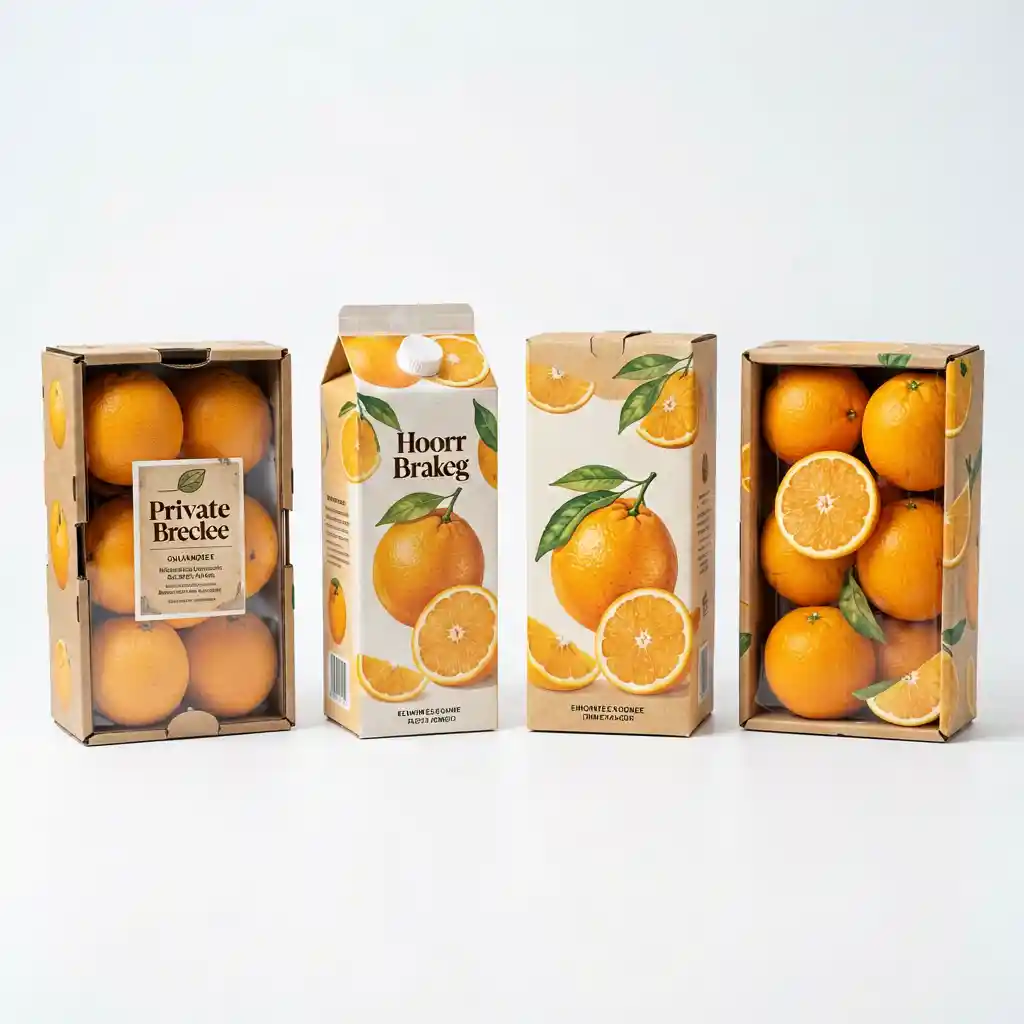
| Quick Answer | Details |
|---|---|
| Minimum order | 1-2 containers (20-40 tons) |
| Lead time | 4-6 weeks from order to delivery |
| Cost premium | 15-25% above generic pricing |
| Required docs | Phytosanitary, certificate of origin, test reports |
| Branding options | Custom packaging, private labeling, co-packing |
| ROI timeline | 12-18 months to profitability |
Contents: ① Getting Started → ② Supplier Selection → ③ Quality Standards → ④ Packaging Design → ⑤ Pricing Strategy → ⑥ Launch Checklist
① Getting Started
Private Label vs Branded Comparison
| Factor | Private Label | Branded Product |
|---|---|---|
| Investment | Low-Medium | High |
| Control | Partial (packaging only) | Full (brand + quality) |
| Speed to market | 4-6 weeks | 6-12 months |
| Risk level | Low | Medium-High |
| Margin potential | 10-20% | 20-40% |
| Best for | New entrants, testers | Established brands |
For supplier selection criteria, see our private label export guide.
② Supplier Selection
Key Evaluation Criteria
- Certifications: GlobalG.A.P., GAP, organic, HACCP
- Capacity: Minimum 2 containers/week during season
- Quality consistency: Brix 12-14°, low defect rate (<3%)
- Export experience: Proven track record with your target market
- Testing capability: In-house lab for pesticide residues
- Communication: English-speaking team, responsive
Recommended Suppliers
| Supplier | Location | Capacity | Specialty |
|---|---|---|---|
| GannanGrove | Jiangxi, China | 100+ containers/month | Premium navel, blood orange |
| Sicilia Agrumi | Sicily, Italy | 50 containers/month | Tarocco, Moro blood oranges |
| Citricos del Levant | Valencia, Spain | 80 containers/month | Sanguinello, navel oranges |
③ Quality Standards
Private Label Requirements
Most retailers require:
- Size grading: Minimum 65mm, preferred 70-80mm
- Brix minimum: 11° (retailer varies)
- Color: Uniform orange, no green spot
- Defects: <3% cosmetic defects
- Pesticide residues: Below EU/US MRLs
- Microbiological: No E. coli, Salmonella
Quality Control Process
- Pre-harvest: Orchard inspections, spray records review
- Post-harvest: Sorting, grading, waxing
- Packhouse: Quality checks, packing, labeling
- Pre-shipment: Container loading supervision, sampling
- Arrival: Quality verification, residue testing
For testing details, see our pesticide testing guide.
④ Packaging Design
Packaging Options
| Option | Cost | Best For |
|---|---|---|
| Standard box + private label sticker | $0.05-0.10/unit | Entry-level private label |
| Custom printed carton | $0.15-0.30/unit | Mid-tier retailers |
| Premium branded packaging | $0.30-0.50/unit | Premium supermarkets |
| Retail-ready packaging | $0.50-1.00/unit | Supermarkets (direct shelf) |
Design Elements
- Logo placement: Visible on all sides
- Origin labeling: "Product of China" (required)
- Barcodes: GS1 compliant
- Nutrition info: Per retailer requirements
- QR codes: Traceability link (optional)
For packaging best practices, see our shipping guide.
⑤ Pricing Strategy
Cost Structure
| Component | Cost (% of FOB) |
|---|---|
| Product cost | 60-70% |
| Packaging | 5-10% |
| Testing & certification | 3-5% |
| Logistics | 15-20% |
| Margin | 10-15% |
Pricing by Market
| Market | FOB Price ($/ton) | Retail Price ($/kg) |
|---|---|---|
| EU (private label) | $600-800 | €3.50-5.00 |
| USA (private label) | $550-750 | $2.50-4.00 |
| UK (private label) | $600-800 | £2.50-4.00 |
| Japan (private label) | $700-900 | ¥400-600 |
⑥ Launch Checklist
Pre-Launch (Weeks 1-4)
- □ Select supplier and sign contract
- □ Finalize packaging design
- □ Obtain necessary certifications
- □ Set up quality control procedures
- □ Establish pricing and margin targets
Launch Phase (Weeks 5-8)
- □ Place initial order (1 container)
- □ Conduct pre-shipment inspection
- □ Arrange logistics and customs clearance
- □ Coordinate with retailer for shelf placement
- □ Monitor quality upon arrival
Post-Launch (Weeks 9-12)
- □ Gather retailer feedback
- □ Analyze sales performance
- □ Adjust packaging if needed
- □ Plan next order cycle
- □ Evaluate profitability
For market entry strategies, see our market analysis.
Summary: Start Small, Scale Smart
Private label citrus is an excellent entry point for new importers. Start with a single container to test the market, then scale up based on performance. Quality consistency and reliable supply are more important than brand recognition in the early stages.
Need More Information?
Our team is ready to assist with your citrus import needs. Contact us for:
- Product specifications: Detailed quality parameters
- Pricing quotes: Competitive FOB/CIF pricing
- Shipping schedules: Available container slots
- Documentation: Complete export paperwork
FAQ: Private Label Citrus
How much does it cost to start a private label citrus brand?
Starting a private label citrus brand requires approximately $8,000-15,000 for the first container, including product cost ($600-800/ton), packaging ($0.10-0.30/unit), testing and certification ($500-1,000), and logistics ($1,500-2,500). Brand design and initial marketing can add $2,000-5,000.
What certifications do I need for private label citrus?
Essential certifications include GlobalG.A.P. (good agricultural practices), HACCP (food safety), and phytosanitary certificates. For EU markets, you may also need FSCC 22000. Most reputable suppliers already hold these certifications.
Can I start with just one container?
Yes, many suppliers accept minimum orders of 1 container (20-25 tons). This is the recommended approach for testing the market before committing to larger volumes. Once you establish retail relationships, you can scale to 2-4 containers per shipment.
How long does it take to launch a private label brand?
From supplier selection to shelf placement typically takes 8-12 weeks. This includes 2-3 weeks for supplier evaluation, 2-4 weeks for packaging design and production, and 4-6 weeks for shipping and customs clearance.
What's the profit margin for private label citrus?
Private label citrus typically offers 10-20% gross margins for importers. Retailers may achieve 25-40% margins on their private label products. Premium positioning and value-added services can increase margins.